A Letter to My Mom: Honoring Mother’s Day and Finding One’s Writing Territory
Posted on: May 1, 2024
My love letter to my courageous mother is next to letters from Suze Orman, Dr. Phil McGraw, Melissa Rivers, will.i.am, Lisa Ling, Dr. Jennifer Arnold and many other amazing sons and daughters. In this third installment of the A Letter to My series…(following A Letter to My Dog and A Letter to My Cat), over sixty contributors share letters that chronicle the love, gratitude, silliness, fun and even conflict that define mother and child relationships. I am so honored to be part of this collection.

My writing teacher, Marjorie Hudson (author of Accidental Birds of the Carolinas) encourages students to ‘find their territory’, to explore the kinds of unique themes and challenges that only they can write about.
The relationship with my mother is definitely my territory. In 2013, I started exploring a snippet of my mother’s life which involved a great act of courage that changed the course of our lives. Since that time, I have continued thinking about the intersection of my life and hers. I am constantly surveying that rich and fertile ground. My mother is no longer living, so writing about her is one way that I can keep her memory alive.

When I saw the call for ‘A Letter to My Mom’, I decided to submit my very personal story. The editor and creator of the A Letter to My series, Lisa Erspamer and her team were amazing. They treated my narrative (and I assume all the others), with great care, respect and unabashed enthusiasm.
A Letter to My Mom is so inspiring and the layout of the book is beautiful. Each entry is accompanied by photos.
Decluttering is About Mindset-Not Just Stuff: Last Two Days to Sign up for Declutter Challenge for Creative People
Posted on: April 11, 2024
Hi creative peeps,
The response to my Declutter Challenge for Creative People has been phenomenal.
This is a reminder for the procrastinators (I see you!) and folks who meant to sign up but forgot—tomorrow is the last day to to sign up and receive two bonuses.
As I say in this video, decluttering is not just about moving things around. It’s about mindset. The process I have created stimulates inner wisdom and transformation. It’s about your future you, less overwhelm, and struggle. The link to the self-paced course is here.
In the video, I explore the concept of ‘backups’, irritants and perfectionism and how they relate going deeper into decluttering mindset work.
Course details here.
Hi creative peeps,
Since it’s spring, it’s a natural time to tackle decluttering. Did you know that I consider decluttering a transformational practice for creatives?
-Are you feeling stuck or stagnant in your creative life?
-Are the techniques you have relied on to expand your creative life not working (i.e. vision boards, affirmations, submitting your work)?
-Are you struggling with clutter?

Ah, Houston, we have a problem!
Clutter is the physical manifestation of unmade decisions fueled by procrastination.
-Christine Scalise
I have created a self-paced declutter challenge course specifically for creatives. It’s based on Feng Shui (the Chinese art and philosophy of placement) and it’s not like any decluttering process you’ve done before. It tackles physical clutter and supports inner transformation. It recognizes the unique challenges that creatives can have with physical clutter and mental clutter (e.g. inner critics) and how they can reinforce each other. This declutter challenge is FUN and manageable. If you’ve got anywhere from 20-minutes to an hour a day for a few days this declutter challenge is for YOU!
Sign up by April 8 and you can join me on a live call and also have access to a bonus conversation with me and a therapist about the relationship between trauma and clutter. More details here.
Want to know more about how I approach this issue of creativity and decluttering? I’ve got three videos that explore the decluttering process, our resistance to it and why I’m so passionate about it as a practice for creatives.
The 5 Things You Say Over and Over Again that Stop You From Decluttering (and How to Overcome Them)!
5 More Things You Say Over and Over Again that Stop You From Decluttering (and How to Overcome Them)!
Shame, Fear and Anger and the Decluttering Process + Why I’m Passionate About Decluttering:
Ready to have a workspace that is welcoming, functional, and mirrors your highest intentions? Ready to be filled with energy and creative magic MOJO? Don’t miss out on this declutter challenge course
Hi writer friends,
I’m hearing from many writers that 2024 is a time for preparing for the next phase of success whether that is planning for a new release (like me!) or making significant progress on the next WIP. In the ever-changing writing and publishing market, and no matter what you write, an important component of being a writer is having a website where people can find you.
If you’re an emerging writer there’s a good chance that you’ve been putting the critical task off of getting your author website done and checked off your list of to-dos. The delays could stem from imposter syndrome (who am I to create a website when I don’t have a ton of publications?), the potential cost, not knowing how to get started.
I GOT YOU!
My writing colleague Li Yun Alvarado teaches writers how to build their own AMAZING website in just a few days without being a tech wiz! That’s right, you can have a beautiful, impactful, true-to-you website in 5-7 days through her successful self-paced course: Writer, You Need a Website! And, the best part is that you won’t spend $$$$ of dollars to do it. Her course is less than $300!!!!
Li Yun is a poet, essayist and activist. She loves helping writers get intentional about “crafting a writing life that you love and an author platform that will help you reach your big, dreamy, knock it out of the park goals.” I met her (and took one of her fantastic workshops) while at the transformative A Room of One’s Own Foundation (AROHO) residency in 2015.
Li Yun believes that your first real author website is about “claiming your writer identity and taking control of how You tell your writer story to the world.” And, it’s not about being perfect. I love that!
She also knows you need a Website.
It’s that simple:
If you’re a writer, you need a website.
Not in the fall, not next summer, not in a few years, not someday.
Now.
Yep, I know that it’s something that you’ve probably been putting off.
Let’s change that today!
Writer, You Need a Website

When you enroll in Writer, You Need a Website!
- You’ll learn why it’s critical to take control of your online author story early in your writing career.
- You’ll learn why social media isn’t enough and why any writer who has published pieces (poems, stories, essays) needs a website.
- You’ll learn her proven First Author Framework which outlines exactly to include on your first site (and what you can wait to add on down the line).
- You’ll learn options to help keep website costs manageable.
- You’ll get step-by-step guidance and access to tech tutorials, so you can build your site fast and with confidence.
- You’ll learn what to do once your site is built, and have access to a resource library to help you as your site evolves in the future.
- AND MUCH MORE
This is an AMAZING course as her many testimonials attest to. Add rocket fuel to your 2024 by making an investment in you-one that gives you skills, visibility and resources, and finally, a great author website.
P.S., You’ve probably got all kinds of questions (like the ones below) and feel some resistance to moving forward–especially if you are an emerging author. This is normal! Don’t let it stop you from moving forward.
“I can’t justify spending money on an author website.”
or
“I sort of write and have a few publications, but I’m not far along enough in my writing career for an author website… am I?”
or
“I’m tech-phobic; there’s no way I can build an author website on my own.”
or
“An author website will be nice eventually, but right now social media works just fine for me.”
or
“I don’t want to blog!”
or
“I’ll get around to building an author website once my book gets picked up.”
Li Yun addresses all this and more here
Submitting one’s work means being visible as a writer. So many creative writers struggle with issues of feeling worthy and deserving of a creative career they often don’t submit their work consistently and/or have a deep fear of rejection from industry professionals. In this video I share how I’ve worked on these issues for myself and on behalf of clients: ‘Cultivate Superpowers for Your Writing Life’. It’s about methods and mindset.
It was fun to make! At the end of the video, I share information about my successful online course Chart Your Path to Publication. There’s a flash sale on it through 12/31.

–VIP BONUS: Goal Setting Workshop: How to Set Writing Goals that You Love (and can Accomplish) in 2024 and ENVISION Lab (NEW!)
Check out all the details HERE get it by Dec 31 & make real progress on your writing goals in 2024.
Hi creative peeps,
In case you aren’t on my newsletter list, I wanted to make sure you knew about the FABULOUS Early Bird Special I’ve created for my Chart Your Path to Publication online course which starts in January 2024. I only open this course once a year.
My online course provides you a roadmap to expertly and joyously navigate your way through the ever-changing and volatile landscape of publishing.
This course will teach you strategies to beat the odds of rejection. You’ll learn how to select markets for your work, how to submit your work, track submissions, and find great resources.
If you come to the end of every year wondering why you aren’t more widely published, this is the course for you!

The reason why I created this course is because a vacuum exists in the writing field with helping writers understand and manage one of the key components of creating a writing career—submitting one’s work. There’s not much about the submission process in writing craft books, except to “just do it”. But this declaration leaves out so much, including 1) how to build relationships with editors 2) how to find appropriate venues for one’s work 3) how to track one’ submissions and 4) how to cultivate a resilient author mindset, especially in dealing with rejection.
I wanted to create a shortcut that would offer writers actionable information on how to navigate the volatile landscape of publishing.
I’ve added even more value to Chart Your Path to Publication:
-Bite-sized lessons
-videos on how to deal with inner critics and how to write better and faster
-2 Co-Writing Sessions in Jan 2024 (NEW!)
-a live Q&A Call
and a special VIP BONUS just for those who enroll by Dec 15!
-VIP BONUS: Goal Setting Workshop: How to Set Writing Goals that You Love (and can Accomplish) in 2024 and ENVISION Lab (NEW!)
Check out all the details HERE and get it by Dec 15 & make real progress on your writing goals in 2024.
Calling ALL Writers and Creative Entrepreneurs: Your Basic Building Block for Every Business Success
Posted on: November 20, 2023
Hi creative peeps,
I’m super excited to tell you all about my number one resource for creating success & abundance in your business!
I’ve been a creativity coach and published writer for fifteen years and have had to learn a wide variety of skills besides writing to be successful. Let’s face it, most successful writers over time have to learn how to run a small business. Many writers expand into providing services to other writers and creatives which requires adopting an entrepreneurial mindset.
Most writers and creatives though feel underprepared in managing the business part of our lives.
Help is here and it is called Leonie Dawson’s Brilliant Biz and Life Academy!
Leonie Dawson’s Brilliant Biz & Life Academy is absolutely packed full of courses, workshops, workbooks and MORE. There’s SO much goodness in there & SO many ways it can help you & your business (actual or aspirational) buuuut doors are closing verrrrry soon!
So if you’ve been thinking of joining THE essential program for peeps wanting to start or grow their business… you need to act QUICKLY.*
It’s genuinely the most affordable, comprehensive & deliciously useful invention around for entrepreneurs!
Who is Leonie Dawson and Why Do I Like Her So Much?
Leonie Dawson is an amazing artist and creator. In her early 20s Leonie was already being featured as a dynamic creative entrepreneur and winning awards for her art and business. I first learned of her work during the early 2000s, as she was featured in several books by my mentor Susan Ariel Rainbow Kennedy aka SARK.
I’d been on her newsletter list for over a decade and always felt inspired by her work. During the pandemic, I signed up for several of her courses (40 Days to Create and Sell Your E-course, Money, Manifesting and Multiple Streams of Income, Marketing Without Social Media) learned TONS and have become a super fan.
Her courses helped me to create and launch my Chart Your Path to Publication e-course that has been financially successful and a joy to administer. And, I have implemented ideas from her other courses that has made running my coaching practice a dream.
The other thing I appreciate about learning from Leonie is that she makes learning about entrepreneurship FUN. She lives her values as a feminist, neurodivergent person, philanthropist, and champion of LGBT, diversity and inclusion issues. These values are reflected in what she teaches, how she teaches and the guest teachers she invites into her program.
I also value the community that she creates to support creative entrepreneurs.
Currently it’s ONLY NINETY-NINE BUCKS per year… for over $5,000+ of Leonie’s powerful, proven & popular business, marketing & creativity programs.
So… What do you get? Honestly it’s probably easier to ask what DON’T you get, because Leonie has you totally covered!
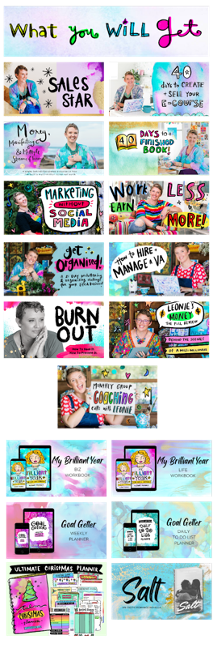
You see what I mean about generous? 🤯
And there’s MORE:
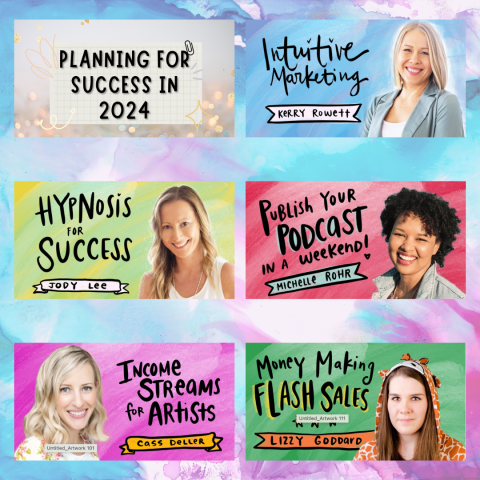
She’s got programs on money, burnout, decluttering, how to sell (her Sales Star is one of the best programs ever, especially for folks who think they hate selling).
Need to finish that book or e-course that you’ve been wanting to do forever?
No problem-she’s got you covered!
And these aren’t quick & dirty programs haphazardly put together for the sake of looking like the Academy is full. No no no. Leonie has been creating these courses since 2018 (and creating courses in general since 2008 – she is the eCourse Goddess!!!) and they’ve been bought by literally THOUSANDS of happy customers. You can read some of their words here!
These are powerful, proven and popular programs that are incredibly comprehensive, all for $99US a year. As sooo many of Leonie’s students (including me!) say: These give just as much & even more value than $2,000 programs! So please don’t miss out on joining, because you’ll be missing out on SO much more than just a membership. You’ll miss out on connection, accountability, fast-tracked growth, business success and some of the deepest belly laughs you’ve ever had.
In three words? Totally worth it.
It’s time we make miracles happen!
*You have until November 30th before her prices rise.
Hi Creatives,
Let’s talk life-changing money books for writers and creatives.
I love books that help me cultivate a more abundant perspective.
I haven’t met an aspiring or established creative professional that couldn’t benefit from looking at beliefs and actions around money, creativity and commerce.
As the amazing visual artist Beverly McIver says, “feeling worthy is a learned behavior.” And, many of us don’t feel worthy of a creative life let alone one that brings us multiple kinds of success.
There are lots of things I can’t control in the pursuit of a writing and creative life, especially as an African American woman. But, I definitely can control how I value myself and how I cultivate my mindset about art, creativity and abundance. That inner work creates tangible results.
I’m sharing some of my favorite books that intersect with money and writing, commerce and creativity. These have made a big difference in my life and they keep me inspired.*
1) Prosperity for Writers: A Writer’s Guide to Creating Abundance

I have read many books on writing mindset and also many books on holistic approaches to money. It is rare, however, to read a book that combines the two in a wonderfully accessible way.
Honoree’s writing is clear, compelling and motivating. She draws on her long-standing experience as a writer and coach as well as interviews with other successful writers to provide practical tips and tools to explore our beliefs about prosperity and writing. The unique exercises are fun and if you work them, they work! They may push you out of your comfort zone but the rewards are worth it.
2) Write to Riches: 7 Practical Steps to Manifesting Abundance from Your Books
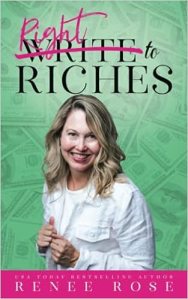
Renee Rose is passionate about helping other authors find and maintain an abundance mindset to catapult their careers and create their best future. She shares her journey to being an 11-time USA Today bestselling romance author and her ups and downs along the way. Her exercises bring in the body and our emotions as it relates to expanding our ideas of abundance-this approach is a standout.
3) Scratch: Writers, Money, and the Art of Making a Living
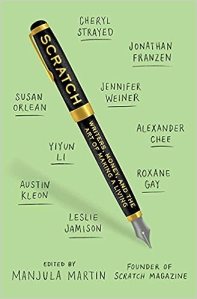
This thought-provoking collection of essays has an all star line-up of prominent writers including Cheryl Strayed, Jennifer Weiner and Jonathan Franzen. This is less of a money mindset book but more a look at the ways in which working writers make money, manage money (or don’t), and the ups and downs of a creative career. I appreciated that the collection includes a range of writers who have worked as freelancers, copyeditors, scriptwriters and as ghost writers.
4) Prosperity Pie: How to Relax About Money and Everything Else
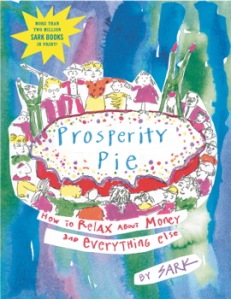
This is one of my all-time favorite books about money and the creative life. Written by writer, artist and all around creative genius Susan Ariel Rainbow Kennedy, aka SARK. This was the first book that made looking at one’s money beliefs and creativity feel safe and fun! She tackles the question: How can we feel prosperous (and creative) “no matter how much we have or do.”
Buy the book
5) Get Rich, Lucky B*itch: Release Your Money Blocks and Live a First-Class Life
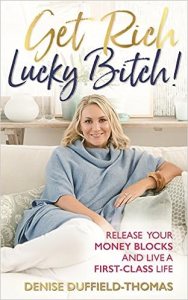
Yes, this book has got a naughty title but it’s been a game changer for me and for a lot of women.
Denise Duffield-Thomas is a podcaster, author and entrepreneur. She began her business writing on her blog and turned that into an enterprise that has earned over 30 million dollars. Her book explores the often negative social and cultural messages women receive about money due to gender socialization. She highlights common ‘money blocks’ for many women and how to overcome them so that you can create a life that you love.
*links to books are affiliates. I may earn a small amount at no additional cost to you. TY!
Edgar Allen Poe fans, my publisher Falstaff Books is putting together an anthology of stories inspired by EAP called ‘Nevermore’. I’ll have a new story in it with the title, “And They Will Rise from The Ocean”! They created a Kickstarter about a month ago to help launch it.
:focal(1096x852:1097x853)/https://tf-cmsv2-smithsonianmag-media.s3.amazonaws.com/filer/c0/b4/c0b41ae2-b449-4157-a874-34f78c0279ee/poe-portrait.jpg) We’re about 3/4 of the way there for funding on Nevermore. If you like creepy stories written by people like Alexander G. R. Gideon, Jason Gilbert, John Hartness, Leslie Gould, Carol Gyzander, Nicole Givens Kurtz, ME and many more – please consider backing this project and/or sharing it with people in your community who might love this kind of work.
We’re about 3/4 of the way there for funding on Nevermore. If you like creepy stories written by people like Alexander G. R. Gideon, Jason Gilbert, John Hartness, Leslie Gould, Carol Gyzander, Nicole Givens Kurtz, ME and many more – please consider backing this project and/or sharing it with people in your community who might love this kind of work.
Your support will allow Falstaff Books to pay the authors $.05/word for their stories, significantly more than the $100 per story we are currently contracted for, and even more than that with stretch goals. In return for your preorder and support, you get mentioned in the book and can get rewards ranging from ebooks, paperbacks, hardcovers, or even your name in the book as a character.
AND for writers several AMAZING editors have rewards that will give you a critique of a query letter or manuscript for an unbelievable price.
Cool video and all details here: http://kck.st/42jY3BN
So if you love creepy stuff, and amazing books, you owe it to yourself to get on over to Kickstarter and back this awesome project! Feel free to share! TY!
Photo credit: Smithsonian Magazine

 The Practice of Creativity